Import delivery data
Pharmacies, orders, volumes, service times and existing route information are transferred from the leading system into an agreed planning structure.
NUNAV Courier plans recurring pharmacy delivery rounds across day and night shifts. Delivery windows, vehicle capacities, depots and operational rules are combined into comparable, workable route options.
Recurring delivery rhythms provide a stable framework. Daily volumes, delivery windows, available vehicles and local rules determine which route structure will actually work.
Pharmacies, orders, volumes, service times and existing route information are transferred from the leading system into an agreed planning structure.
Day, night and weekend shifts, vehicle availability and capacity reflect the real limits of planning — including operations that cross calendar days.
NUNAV compares possible allocations and sequences based on travel time, distance, delivery windows, capacities and operational rules.
Planned routes can be provided as route lists, structured data or driver assignments for operations, carriers and connected systems.
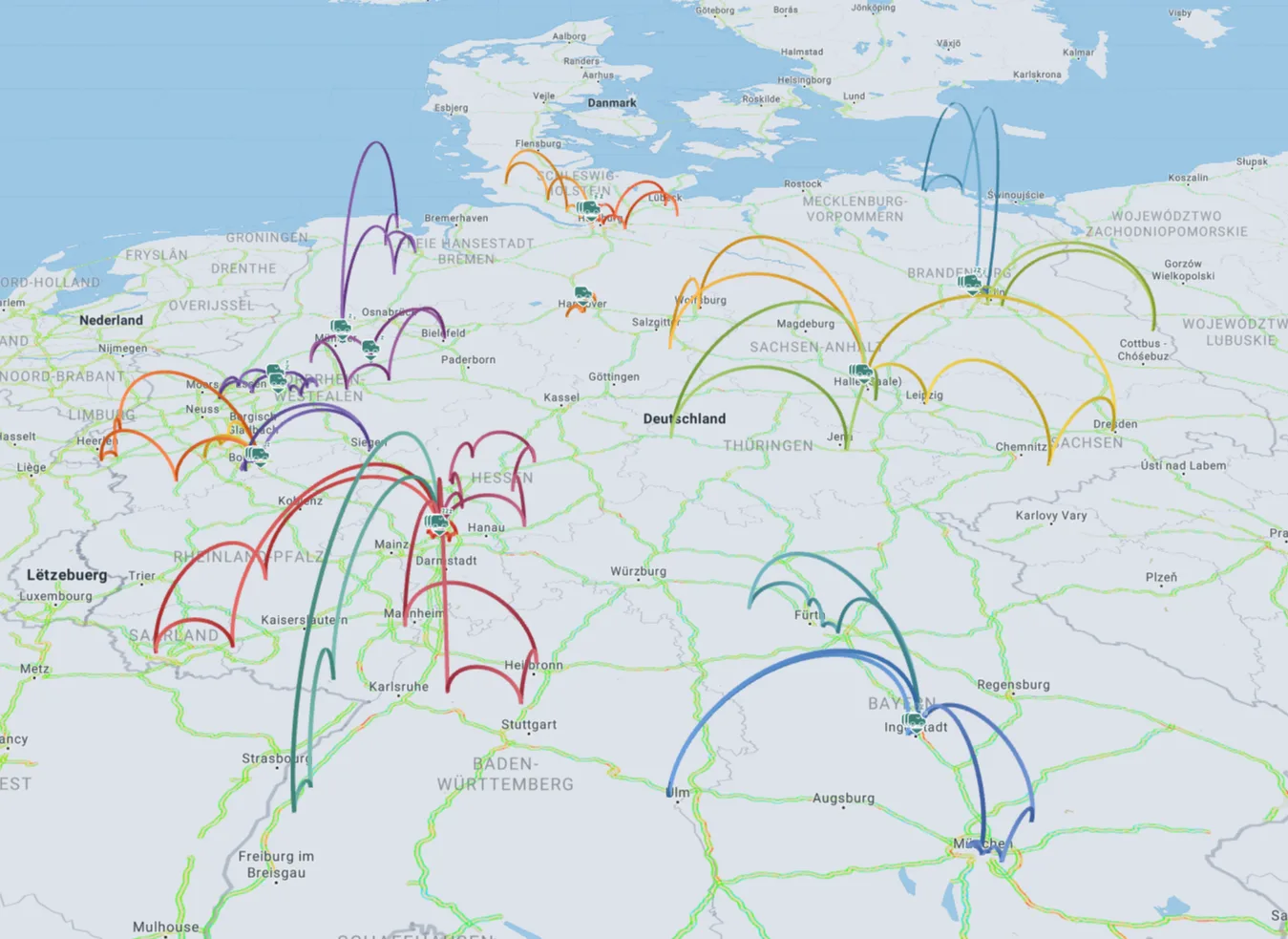
The shortest distance alone does not make a robust delivery route. The plan must align the agreed delivery rhythm with the resources that are actually available.
Time constraints are planned together with the start, end and transition of each shift. This includes routes that continue beyond midnight.
Different vehicle types, load limits and simultaneous route demand reveal early whether the available fleet fits the planned structure.
Typical weekdays and shifts can be represented as reusable planning cases and reassessed when volumes or operating conditions change.
Value is created when delivery data enters planning reliably and results return to operations without unnecessary manual steps. The exact data exchange is adapted to the existing system landscape.
Existing data sources are connected through import templates, interfaces or agreed middleware — including branches that use different source systems.
Stop sequence, planned times, distance and route duration can be provided in an agreed format for dispatchers, drivers or external carriers.
Alternative route structures, changed depot conditions or new shift models can be compared against a defined reference case.
Consistent metrics make options understandable and provide a robust basis for operational decisions and partner discussions.
Typical weekdays, delivery rhythms and existing route structures provide the starting point. When volumes or constraints change, allocation and sequence can be recalculated without losing proven operational rules.
Yes. Shift times and vehicle availability can be defined as planning constraints. Shifts and routes that continue beyond midnight into the following day are included in the data and rule model.
Vehicle types, capacity limits and time-based availability can influence allocation. This shows whether a route option is genuinely workable with the existing fleet.
Yes. A defined reference case can be compared with alternative vehicle, shift, depot or route models. Consistent assumptions and metrics make the differences transparent.
Data exchange is designed around the existing system landscape. Options include structured file imports, interfaces or middleware, as well as route lists and data exports for downstream systems.
A shared data and rule model creates standards while local fleets, shifts and delivery areas remain configurable. The rollout can start with selected branches and expand step by step with training, templates and support.
Every industry has its own rules, time windows and data structures. These solution pages show how dispatchers plan and steer each operation with NUNAV Studio.
We assess delivery data, time windows, shifts, vehicles and required outputs using a manageable reference case — transparently and without disrupting live operations.